
Moving back to Ireland often comes with a firm arrival date and a long list of decisions that need to be made before you can see the property regularly.
The aim does not have to be a perfectly finished home on day one. It is to decide what will make the house comfortable, functional and recognisably yours when you arrive, then organise the design and purchasing in the right order.
Our Moving Home to Ireland service supports clients returning from the UK, United States, Canada, Australia, Dubai and elsewhere, as well as international clients buying in Ireland. Depending on the property, the work may involve a renovation, a complete interior design or a focused turnkey furnishing service.
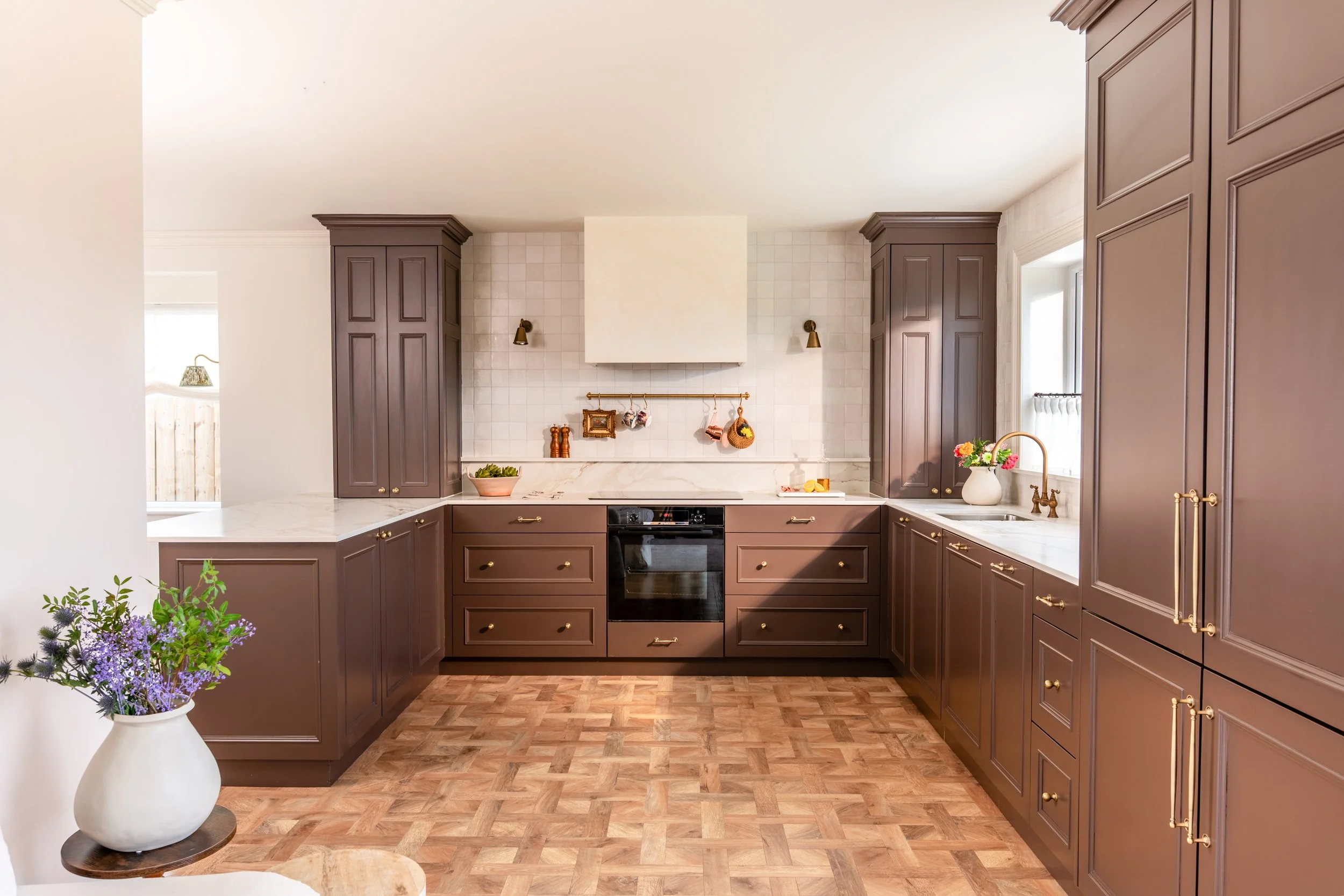
Warrenpoint Residence, County Down.
Decide what “ready” means for your move
Start with the first week rather than the final photograph.
Which rooms need to function immediately? For most households, that means suitable beds, comfortable seating, a usable kitchen, privacy at the windows, essential lighting and enough storage to unpack. If you are returning with children, working from home or welcoming family soon after the move, your priorities may be different.
Write a short arrival brief for each principal space. A living room may need a sofa, occasional lighting, window treatments and somewhere to place a drink. A bedroom needs more than a bed: bedside lighting, privacy, clothing storage and practical circulation all affect whether the room works.
Once the essentials are clear, separate them from items that can be added later. This keeps the budget focused and prevents urgency from driving every purchase.
Establish the condition and information available
A newly completed house, an existing property and a home that requires renovation need very different levels of preparation.
Before furniture is specified, gather accurate plans or measurements, clear photographs and video, and details of fixed finishes, sockets, radiators, lighting points, door swings and window sizes. Access information matters too: narrow stairs, limited parking or an apartment lift can affect what can be delivered.
If the property is still under construction, confirm which items the builder is providing and when rooms will be sufficiently complete for final measurements. Furniture and window treatments should not be ordered from unverified dimensions.
Choose the right level of design support
There are two main ways we can support a home being prepared from abroad.
Full-Service Interior Architecture & Design is suited to a new build or renovation where the work includes layouts, kitchens, bathrooms, bespoke joinery, lighting, materials, colour and furniture. The interior is developed as part of the wider property, with design coordination alongside your appointed architect, builder and specialist team.
Turnkey Home Furnishing is for an existing or newly completed property that mainly needs furniture, decorative lighting, window treatments, rugs, artwork, procurement, delivery coordination, installation and styling.
Both are bespoke services rather than fixed-price packages. If your project involves building work, you can also explore our wider Residential Interior Architecture & Design service.
Plan the furniture before selecting individual pieces
A furniture layout is the foundation of a furnishing scheme.
It establishes scale, circulation and the relationship between pieces before anything is purchased. It also reveals practical requirements: the right rug size, where a floor lamp can be powered, whether a dining table allows chairs to move comfortably and whether storage is sufficient.
Buying one attractive item at a time without a plan can leave a room feeling crowded or incomplete. A coordinated layout allows the furniture, lighting, window treatments and artwork to form one interior, even when they come from different makers and suppliers.
Prioritise lighting, window treatments and storage
These elements are frequently left until late, yet they have an immediate effect on how a home works.
Decorative lighting creates layers beyond basic ceiling fittings and helps rooms feel settled in the evening. Window treatments provide privacy, light control and softness, but made-to-measure curtains and blinds require confirmed dimensions and production time. Storage determines whether you can actually unpack when you arrive.
If electrical work or bespoke joinery is required, the relevant decisions need to be made earlier because they may affect trades on site. In a finished property, freestanding furniture and decorative lighting can often solve some needs without reopening completed work.
Set the furnishing budget by priority, not by room count
A useful budget includes furniture, rugs, decorative lighting, window treatments, artwork, delivery, installation and the professional fees associated with design and procurement.
It should also reflect how you live. A family that spends most of its time around the kitchen and dining table may choose to invest there and furnish a formal room more gradually. Someone working from Ireland for an overseas employer may need a proper study ready from the first day.
Rather than dividing the available amount equally across the house, identify the pieces that are used every day, difficult to replace or important to the character of the home. Secondary furniture and decorative layers can often follow once you have lived in the space.
Decide what to bring and what to source in Ireland
Items with personal meaning can give a new home immediate identity, but every existing piece should be assessed for scale, condition and practical use.
Record the dimensions and photograph anything you may bring. Those pieces can then be included in the furniture plans instead of arriving as an afterthought. This is particularly important for large dining tables, sofas, artwork and heirloom furniture.
For items you plan to source in Ireland or Europe, consider lead time, availability, delivery requirements and how they sit alongside what you already own. Your removal company or relevant official adviser should guide you on shipping, customs and import requirements; the interior design process should focus on suitability, placement and the overall scheme.
Use scheduled presentations to make decisions remotely
A remote design process should make decisions easier to understand, not simply move a showroom visit onto a video call.
We present related selections together through drawings, material references, furniture proposals and costs. This allows you to see how each room is developing and how it connects to the rest of the home. Scheduled meetings create time for questions, while a written approval record keeps decisions clear across time zones.
Physical samples can be reviewed during planned visits to Ireland or sent to you where practical. For colour, timber, stone and textiles, the physical material remains important because screens cannot accurately reproduce every tone and texture.
Work backwards from realistic lead times
Furniture and interiors are not usually delivered in the order they are selected.
A sofa may have a longer production time than an occasional table. Bespoke window treatments need final measurements after the relevant work is complete. Decorative lighting may require installation by a qualified electrician. Artwork and accessories can often be sourced later.
A procurement schedule records what has been approved, when it needs to be ordered, the expected lead time and where it will be delivered. It should be coordinated with the property programme, but completion dates cannot be guaranteed by the interior designer when they depend on construction, suppliers, shipping and site readiness.
Prepare the property for delivery and installation
Before delivery dates are confirmed, the home should be secure, dry, clean and accessible. Painting and dusty construction work should be complete in the relevant areas, floors protected where necessary and defects that could affect installation resolved.
Someone also needs authority to receive and inspect goods. The scope should make clear who will coordinate deliveries, whether any storage is required, who installs each item and what happens if the property is not ready.
Where included and practical for the location, a coordinated installation brings furniture, window treatments, lighting, artwork and accessories together. It is the point at which separate orders become a home rather than a collection of deliveries.
Leave space for the home to develop
Preparing in advance does not mean removing every decision from the experience of living there.
Books, artwork, smaller objects and some occasional furniture often become more personal once you understand the rooms and your routines. Leaving a few deliberate gaps is better than filling them with pieces chosen only because they were available quickly.
The overall design can still be established before your move, giving later additions a clear direction without making the home feel fixed or overly styled.
Create character from the property and the people
A home prepared from abroad should not feel anonymous or like a temporary show house.
At Warrenpoint Residence, natural texture, warm cabinetry, layered furniture and lighting give a newly completed home the character of an established interior. Deerpark Residence takes a different approach, drawing from the farmhouse setting and existing fabric. The lesson is not to repeat either look, but to begin with the particular property and the people who will live there.
A practical pre-arrival checklist
Confirm the move date and which rooms must function immediately.
Obtain accurate drawings, measurements and current photographs.
List what is included with the property and what still needs to be supplied.
Identify furniture and artwork you intend to bring.
Approve furniture layouts before purchasing individual pieces.
Confirm final measurements for window treatments and joinery.
Record decisions, costs, lead times and delivery addresses.
Agree who receives, inspects, stores and installs each item.
Confirm that the property will be secure, clean and ready for delivery.
Keep a short list of non-essential pieces that can be added after you arrive.
Preparing your Irish home from abroad
Aoife Maria Interiors works from studios in Newry, County Down and Cork City, County Cork, supporting residential projects across Ireland and Northern Ireland. We can shape the work around a new build, renovation, existing home or completed property, with remote presentations and site involvement agreed for the project.
If you are moving back to Ireland and want your home designed or furnished before you arrive, tell us where you are based, where the property is and what you would like ready for your move.